Strengthening last-mile health care in Odisha and Chhattisgarh
Bhubaneswar 8th April 2026 : Odisha and Chhattisgarhare proverbial paradox states that sit at the heart of the country’s mineral economy, supplying coal, bauxite, aluminium, and iron ore that power industrial growth. Yet, across large swathes of their rural districts, health indicators continue to lag behindnational averages.Inaccessibility, nutritional vulnerability, and the absence of quality careremain a bane for the people
CSR and health interventions in mining and industrial corridors navigate these geographical challenges to ensure last‑mile connectivity and bridge barriers to healthcare services.
For Vedanta Aluminium, operating in underserved areas of Odisha and Chhattisgarh, the focus in recent years has increasingly been on last‑mile health service delivery, charting pathways from village‑level detection to tertiary treatment and care.
Government surveys underscore why this approach matters. The National Family Health Survey-5 (NFHS-5)reveals that challenges persist in nutrition, maternal health, and early disease detection, particularly in underserved districts. It is in this realm that last‑mile healthcare interventions, including those supported by industry, become imperative.
Through the years, Vedanta Aluminium’s integrated health model has demonstrated measurable impact across its operational regions. With sustained community engagement and expanded infrastructure, the company hasimpacted over 7 lakh beneficiaries across Odisha and Chhattisgarh, reached 4,09,079 people through health awareness initiatives, and recorded a combined 1.74 lakh footfall across its three hospitals.
When distance is the first barrier
In rural districts, the pathway to care often begins with first contact. The nearest primary health facility may be several kilometres away, with limited transport options and irregular outreach. In such settings, delayed care is often a function of geography rather than intent.Vedanta Aluminium’s health interventions therefore work in close collaboration with frontline health workers, ASHA and ANM cadres, to strengthen first‑level detection, referrals, and follow‑up care in these hard‑to‑reach communities.
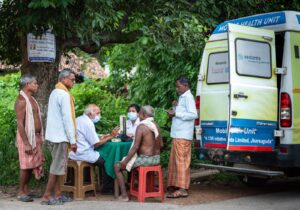
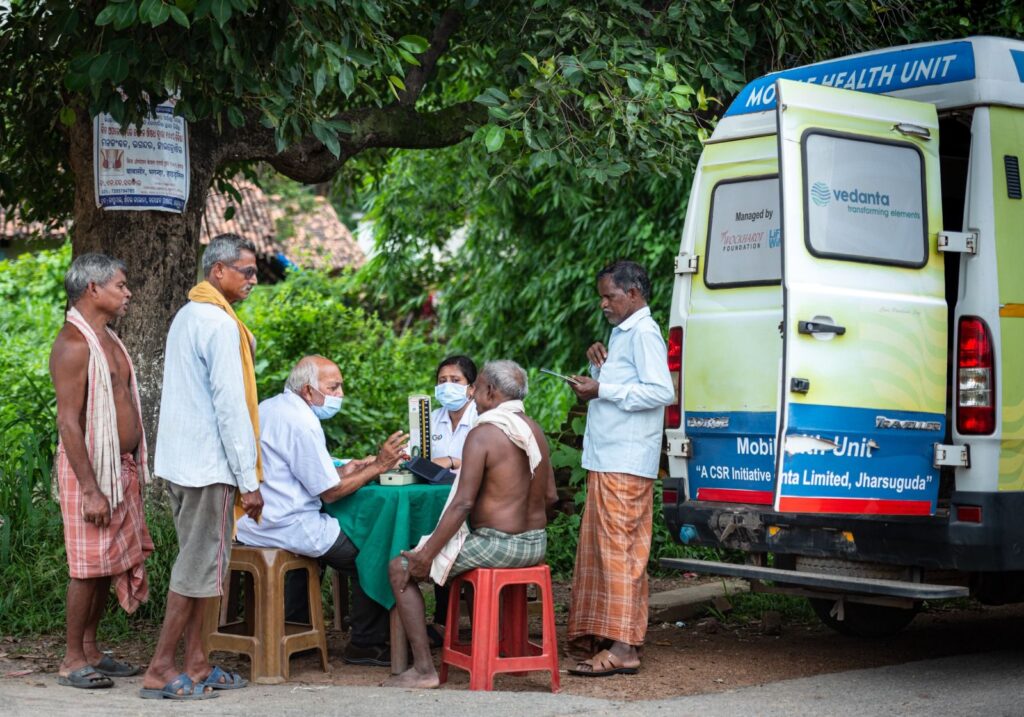
It is within this access gap that mobile healthcare models have emerged as a critical first layer. Across industrial and mining corridors in districts such as Jharsuguda, Kalahandi andSundargarh in Odisha, and Korba in Chhattisgarh,Vedanta Aluminium has deployedMobile Health Units (MHUs) to take basic medical services directly into villages.
Functioning as travelling clinics, these MHUs provide primary consultations, essential medicines and basic diagnostics, alongside preventive health awareness.
Among the many beneficiaries is Mrs. Aasha Patel from Korba, who had been living with arthritis and diabetes for years. Routine tasks had become painful, and she often felt dependent on her family for even the simplest activities. When Vedanta BALCO’s Mobile Health Unit began visiting her village, the doctors treated her ailments, counselled her on medicines, exercises, and daily care. Over time, she experienced a noticeable reduction in pain, regained mobility, and found new confidence in managing her health.
The MHUs cover more than 200 villages across Odisha and Chhattisgarh with doorstep healthcare services.
Dr. Netrananda Nayak, Head, Community Health Centre, Kashipur, said, “I would like to commend Vedanta for providing quality healthcare at the doorstep through its Mobile Health Units. This vital initiative enhances medical access andraises health awareness, fostering a healthier community.”
However, outreach alone is not sufficient without places to refer patients to. Recognising this, Vedanta Aluminium’shealthcare efforts have extended beyond mobility to the creation of local health infrastructure, aimed at reducing the distance between detection and treatment.
In Kalahandi, the MSJK Hospitalserves as a secondary care facility for surrounding villages, providing inpatient care, emergency services and specialist consultations that would otherwise require travel to distant hospitals. Speaking about her family’s experience,Ranu Majhi, a resident of Bengaon Gram Panchayat,Kalahandi, shared, “When my mother fell seriously ill, reaching a hospital in a town was simply not possible for us that day. MSJK Hospital became our lifeline. The doctors attended to her immediately, and the treatment she received here saved us from making a long, difficult journey.”
Similarly, the Vedanta Diagnostic Centre in Jharsuguda strengthens local access to diagnostic services, addressing a common bottleneck in timely treatment by bringing testing closer to communities.
Bridging cancer care gaps
For non-communicable diseases and cancers, in particular, delayed diagnosis remains a structural issue across central and eastern India. Patients from districts in Odisha and Chhattisgarh have historically travelled hundreds of kilometres to metros for specialised care, often too late.
Against this backdrop,Vedanta’s BALCO Medical Centre (BMC)in Naya Raipur, Chhattisgarh was established as a regional tertiary oncology facility, addressing a longstanding gap in central India’s cancer care ecosystem.
With 170 beds, BMC positions itself from prevention and screening to diagnosis, treatment and follow-up. The hospital serves patients not only from Chhattisgarh, but also from neighbouring districts in Odisha, reducing the need for long distance travel to metros.
Since inception, BMC has treated over 66,000 patients,conducted over 500 outreach screening camps across Chhattisgarh. An estimated 60% of its patients come from rural and tribal districts, underscoring its role as a critical lifeline for communities with limited access to specialised cancer care.
A cancer survivor treated at BMC said, “When I first came here, I had lost hope because travelling to a big city for treatment was beyond my means. BMC treated my illness and supported me through every stage of recovery. For families like ours, this hospital is nothing short of a blessing”
For patients, proximity alters the equation. The availability of diagnostics, oncology services and follow-up in one location reshapes treatment decisions that might otherwise be deferred or abandoned.
Connecting the continuum and its limits
Seen together, Vedanta Aluminium’s health interventions span three interconnected layers, beginning with prevention and awareness at the village level, early detection and referral through mobile outreach, and specialised treatment access via healthcare infrastructure.
This layered model reduces travel burdens, shortens detection and treatment cycles, and strengthens healthcare pathways in some of India’s most remote geographies.
Odisha and Chhattisgarh will continue to fuel India’s industrial growth, but whether that growth translates into durable community well‑being depends on addressing vulnerabilities, especially those related to health, and moving beyond episodic interventions to create systemic change.