More Than Minerals – How Sijimali Reflects Odisha’s Mining-Led Progress

Bhubaneswar 16th May 2026 : Odisha’s economic rise is best explained in a single recent development. In March 2026, it topped the 2nd edition of the NITI Aayog Fiscal Health Index, which assessed Indian states on their fiscal performance, helping them identify vulnerabilities and respond with evidence-based policymaking. The report found Odisha’s fiscal health to be the best in the country, with strong revenues, low deficits, and disciplined public spending. The real story behind the numbers, however, lies in how this transformation has been firmly anchored in the state’s mineral wealth.
Resources such as coal, iron ore and bauxite, of which Odisha has vast reserves, have done more than just supply the state’s industries. They have shaped its public finances and enabled sustained investments in urban and rural infrastructure. Industry today contributes over 40 percent of Odisha’s output, with mining and metals underpinning its foundation. Indeed, the Odisha Economic Survey 2025-26 also underscores how the sector generates nearly 80 percent of the state’s total non-tax revenue.
Within this scenario, the Sijimali bauxite project, which straddles the districts of Rayagada and Kalahandi takes on broader significance. Awarded to Vedanta through auction in 2023 and currently undergoing statutory approvals, it represents the next phase in a model that has already reshaped much of the state’s economy. As one of India’s highest premium auctioned mines with an approved production capacity of 9.0 million tonnes per annum, the project is expected to contributenearly INR 4,000 crore every year in auction premium, mineral royalties, District Mineral Foundation (DMF), etc.
At a national level, the significance of bauxite has also evolved considerably. Aluminium is increasingly central to India’s energy transition and manufacturing ambitions, with demand rising across sectors such as infrastructure, electric mobility, renewable energy, power transmission, defence and aerospace. In this context, securing long-term domestic bauxite resources assumes strategic importance for India’s industrial growth and mineral security.
A closer look at Sijimali project’s development plans reveals howsuch mineral resourcescan be sustainably leveraged to play a direct role in supportingthe state’s socio-economic growth.
The Sijimali plateau is characterised by difficult terrain and relatively low soil moisture retention across several stretches, factors that have historically constrained dense vegetation and agricultural productivity in parts of the region.. While a part of the project area is classified as forest land, tree density remains low across much of the site, with the underlying bauxite limiting water percolation. Across the entire mine lease area of roughly 1,549 hectares, fewer than 2,933 trees have been recorded.
The environmental approach proposedby Vedanta in the project’s mine development roadmap takes these factors into account. Plans include large scale afforestation, with over 22 lakhindigenous trees to be planted within the lease area andon degraded land beyond it. Together, these measures aim to significantly expand green cover over time, reshaping the ecological profile of the region.
Water availability presents another dimension of the plateau’s constraints. Rainfall is part of the local climate cycle, yet retention remains limited, with only a small proportion of surface runoff reaching catchment areas. Vedanta’s planned interventions include setting up a network of contour bunds, check dams, and drainage channels extending over several kilometres, designed to slow runoff and improve recharge by nearly 300% in the region. The intent is to strengthen local water systems in a region where availability has long remained inconsistent.
Mining activity in this setting involves surface extraction, with bauxite deposits being quite shallow, located close to the topsoil; at a maximum depth of 150 feet to be specific, far above the 750-850 feet at which groundwater in the region lies. Excavation depth is therefore expected to be limited, allowing land to be restored progressively alongside ongoing operations. Mined areas will be refilled and afforested in phases, with the aim of completely greening them over time.
“Mining today is not approached as a one-time intervention,” a Vedanta spokesperson said. “Our focus is on a full lifecycle approach, where operations, community and ecology progress together, with long-term outcomes in mind.”
The human context adds another layer to the mine’s development plans. The mine’s rehabilitation framework outlines quality housing, infrastructure, and compensation options in line with statutory provisions.Eighteen villages fall within the broader lease area, while relocation will be limited to two villages comprising around 151 families. Vedanta has committed to housing the relocated families in newly developed, high-quality colonies designed to preserve their way of life. Each family will receive a 2BHK house, built over 0.1 ha (10 decimal) area, complete with kitchen garden in the front and a cattle shed in the back. Two housing colonies will be constructed in Kalahandi and Rayagada each, featuring amenities such as community centres, chaupal, school, dispensary, temple, fair-price shopping complex, veterinary clinic, and even a cremation ground.The rehabilitation framework envisages substantial investment towards housing, civic amenities and social infrastructure for families being relocated, reflecting the project’s long-term resettlement commitment. The company has indicated that the cost to develop each family dwelling will be aroundINR 2 crores.
Beyond relocation, the long-term challenge faced by the region is one of survival, owing to limited livelihood opportunities. Agriculture is often marginal, influenced by the adverse terrain and soil conditions. Practices such as poduchaas, a form of shifting cultivation done by burning trees and cultivating crops, continue as a means of subsistence, though they place pressure on local ecology. High levels of migration to other states for work has become a recurring pattern, particularly among younger residents.
“Many of us go outside for work after the farming season,” said a resident from a nearby village. “If there is work here, closer to home, I would of course prefer to stay.”
It is estimated that the mine will help create around 1,500 direct and indirect employment opportunities over the project’s lifecycle, alongside diverse roles in associated logistics, services, and local enterprises.
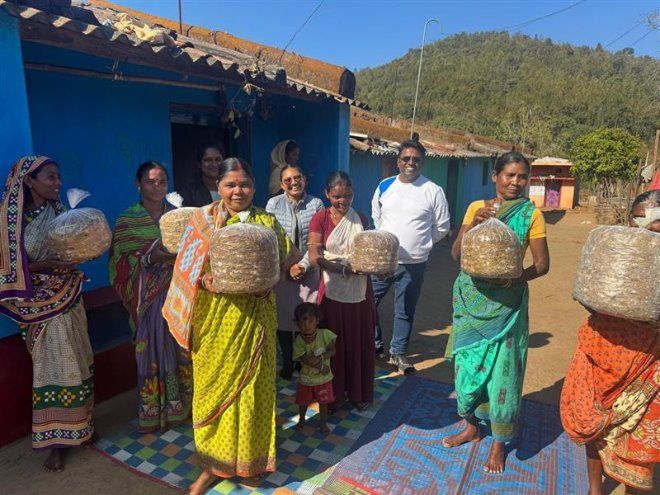
The distribution of benefits has also been shaped by policy. The project’s contributions to the District Mineral Foundation ofaround ₹30 crore annually, are expected to channel significant funding into local development, with nearby communities directly benefitting. They will support added improvements in access to healthcare, education, water access, and infrastructure. Already, Vedanta has deployed several developmental initiatives in the region, including Mobile Health Units serving over 50 villages, smart classrooms under the Gyan Jyoti programme, Nand Ghars (modern anganwadis), safe drinking water projects and women’s livelihood programmes, demonstrating Vedanta’s long-term commitment to these communities.
The state’s position at the top of the Fiscal Health Index reflects the cumulative outcome of a sustainable mining trajectory, where mineral revenues have supported disciplined finances and sustained investment over time.Sijimali sits within this larger arc. It extends an established model into a region that has so far remained at the margins of progress, linking local realities with state level priorities. The project’s significance lies not only in the resources it unearths, but in how it is poised to connect economic opportunity with tangible development.