National Security, Rule of Law and Islamic Ethics
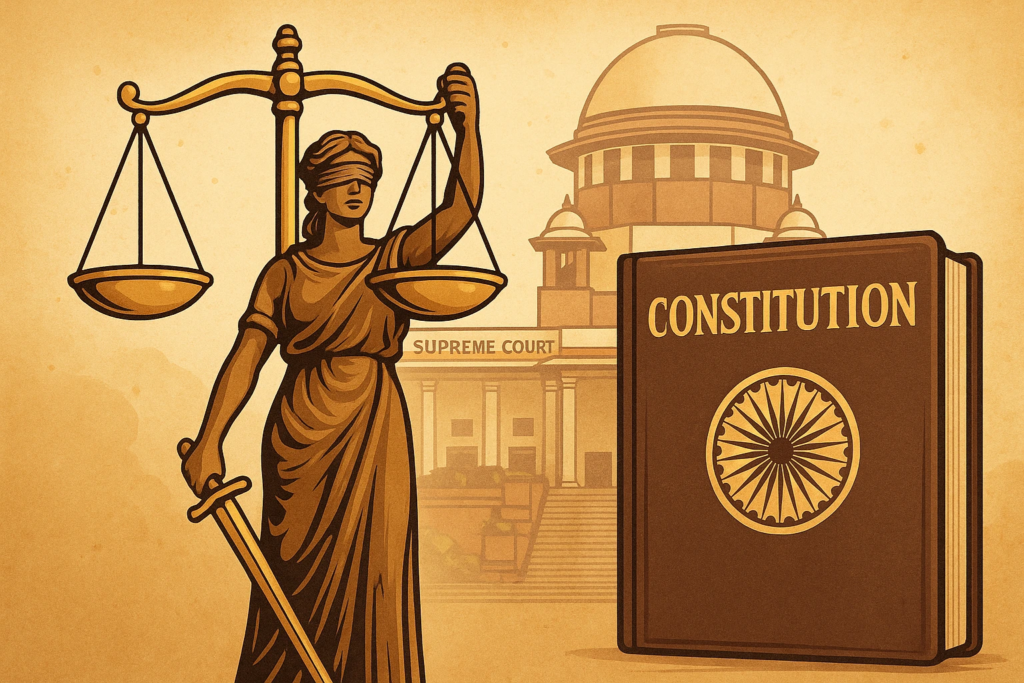
Recent reports regarding the demolition of certain religious structures near the Indo-Pak border in Rajasthan have generated public discussion. Such developments naturally evoke strong emotions because places of worship hold deep spiritual significance for believers. At the same time, governments have a responsibility to protect national security and enforce the law. When these two concerns appear to come into conflict, it becomes important to approach the issue calmly, respectfully, and in accordance with both legal principles and ethical values.
Every country has the responsibility to safeguard its borders, protect its citizens, and maintain public order. National security is one of the primary responsibilities of any government. Without security, it becomes difficult for people to enjoy other rights such as education, healthcare, economic opportunity, and religious freedom. This is why constitutions and legal systems often allow reasonable restrictions on individual rights when they are necessary for public safety, national security, or public order, provided such actions are taken according to law.
Islam also recognizes the importance of order, justice, and lawful authority. The Quran says, “O you who believe! Obey Allah, obey the Messenger and those in authority among you (Surah An-Nisa 4:59)”. Classical Islamic scholars have explained that obedience to lawful authority in matters of public administration helps preserve social order. Islam further emphasizes justice and due process. The Quran states; “O you who believe! Stand firmly for justice as witnesses for Allah, even if it is against yourselves or your parents and relatives (Surah An-Nisa 4:135)”. This verse reminds Muslims that decisions should be based on evidence and justice rather than emotion or personal preference.
Questions involving ownership of land, public property, or construction are matters that courts examine using legal evidence. Islamic law also places great importance on evidence in resolving disputes. The Prophet Muhammad said; “The burden of proof is upon the claimant (Hadith 33, 40 Hadith an-Nawawi)”. This principle has guided Islamic judicial practice for centuries. Claims relating to property or ownership should be supported by credible evidence rather than assumption or emotion.
Islam also teaches that places of worship should be established through lawful and ethical means. The Quran warns believers against consuming or taking the property of others unjustly; “Do not consume one another’s wealth unjustly (Surah Al-Baqarah 2:188)”. For this reason, classical jurists generally held that a mosque should be built on land that has been lawfully acquired and is free from disputed ownership. A place dedicated to the worship of Allah should itself be founded upon justice and clear legal rights, not upon contested claims or unlawful occupation.
Throughout Islamic history, scholars emphasized that the sanctity of a mosque is closely connected with the lawful manner in which it is established. Building a mosque on land that belongs to another person without consent, or on disputed property, has generally been regarded as contrary to the principles of justice that Islam upholds. The Prophet Muhammad also taught respect for the rights of others. He said, “Whoever takes a piece of the land of others unjustly, he will sink down the seven earths on the Day of Resurrection (Sahih al-Bukhari 2454)”. This Hadith demonstrates the seriousness with which Islam treats property rights.
Whenever courts decide cases concerning land ownership, they do so by examining documents, records, witness testimony, and applicable law. Respect for judicial institutions is an important aspect of maintaining the rule of law in a democratic society. Islam strongly discourages individuals from bypassing lawful processes. Muslim leadership needs to initiate awareness drives across the nation for legally registering the religious sites by purchasing the land and registering them in official records. This approach protects both individual rights and the broader interests of society.
Ultimately, issues involving national security, public land, and religious structures are often sensitive and complex. They require careful examination of facts, legal evidence, and constitutional principles. Public discussion should therefore remain respectful and avoid spreading rumors or unverified claims. This principle is especially relevant in the age of social media, where incomplete or misleading information can spread rapidly.
In conclusion, Islam upholds justice, lawful authority, evidence-based decision-making, respect for property rights, and peaceful resolution of disputes. It teaches that religious devotion should always be accompanied by honesty and fairness. Whatever the outcome of any legal dispute, Muslims are encouraged to respect lawful processes, verify information before forming opinions, and uphold both the sanctity of worship and the principles of justice that form the foundation of Islamic ethics.
Insha Warsi
Francophone and Journalism Studies
Jamia Millia Islamia